
How Baby Boomer Tastes Still Influence Pop Culture Trends

Baby Boomers have left a lasting imprint on modern culture—one that continues to shape what people watch, wear, and listen to today. While newer generations often define trends, many of those ideas are rooted in patterns established decades ago.
From music and television to fashion and consumer behavior, Boomer-era preferences created systems that still guide industries. What’s changed isn’t the foundation, but how those influences are adapted and reinterpreted. Looking closely reveals that much of what feels current is actually part of a longer cultural cycle.
The Boomer Music That Still Runs the World
Born between 1946 and 1964, Baby Boomers number 76 million strong in America alone — a generation shaped by post-WWII prosperity and a hunger for something new. They ditched Big Band horns for electric guitars and drums, blending gospel, country, folk, and R&B into rock 'n' roll.
That fusion didn't just define their identity — it rewired global pop culture permanently. You can hear their influence everywhere today. Greta Van Fleet's garage revival echoes Led Zeppelin's raw power, while the vinyl resurgence proves Boomer-era sounds still command serious demand.
Current artists borrow '70s guitar riffs and vocal styles without apology. Boomers built a musical foundation so solid that today's culture keeps returning to it, generation after generation. Even the industry's behind-the-scenes talent carried outsized legacies, like Simon and Garfunkel, who got their start performing under the name Tom and Jerry before becoming one of the most iconic folk-rock duos of the Boomer era.
Why Boomer Fashion Keeps Cycling Back Into Style
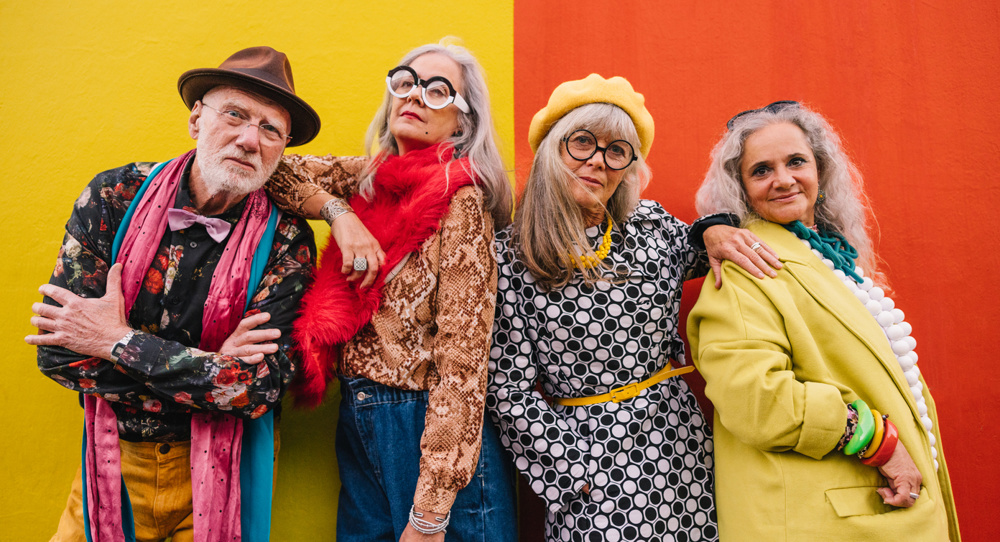
Fashion doesn't forget where it came from — and Boomer style proves it every season. You're watching timeless silhouettes and textile nostalgia drive 2026's biggest trends, from double denim's +22.6% catwalk surge to polka dots dominating spring collections. Here's why Boomer fashion keeps returning:
- Denim legacy — Canadian tuxedo styles appeal across generations, with millennials leading personalized, embroidered variations.
- Print revival — Polka dots shift Gen Z away from animal prints, cycling back Boomer-era patterns with modern micro-dot updates.
- Tactile dressing — Bouclé blazers, suede, and chunky knits reflect Boomer textile nostalgia adapted for today's wardrobes.
- Structured accessories — Beaded necklaces and slingback shoes reintroduce classic Boomer formality into casual, everyday styling. Searches for personal style have surged +440% year-over-year, reflecting a growing demand for individuality that vintage Boomer-era accessories are uniquely positioned to satisfy.
Boomer fashion doesn't fade — it just reloads.
The TV Formats Boomers Built That Streaming Still Copies
Television as we know it today was largely shaped during the Boomer era. Many of the formats that defined early broadcast programming remain central to modern streaming platforms.
Multi-camera sitcoms established a structure that continues to influence comedy series. Anthology storytelling, which presents self-contained narratives within a broader theme, has been revived in modern series. Serialized dramas introduced cliffhangers and long-form storytelling techniques that encourage continued viewing.
Late-night programming formats also remain consistent, with hosts, interviews, and monologues forming a familiar structure across decades. While production quality and distribution methods have evolved, the underlying frameworks remain largely unchanged.

Why the Entertainment Industry Still Makes Everything for Boomers
Despite what streaming algorithms and youth-focused marketing campaigns suggest, the entertainment industry still builds its economic foundation around baby boomers — and the numbers explain why.
Boomers represent 42% of home buyers, spend roughly 7.7 hours daily on digital entertainment, and account for 1.2 billion monthly app downloads. Nostalgia marketing and targeted programming aren't accidental — they're strategic responses to undeniable demographic weight. Here's what drives industry decision-making:
- 46% of boomers watch primarily live television
- 79 million boomers create substantial, sustained market demand
- 19% more likely than younger audiences to respond to online marketing
- 30%+ of 2026 voters will be boomers, amplifying cultural influence
You can't ignore a generation that still controls this much economic and cultural power. The baby boom spans from 1946 to 1964, a period tied directly to couples reuniting after World War II, meaning this generation's cultural dominance has been building for nearly eight decades. Approximately 76 million Americans were born during this period, cementing a demographic force that industries simply cannot afford to overlook.
Check out MrPopCulture.com and learn more about pop culture trends in baby boomer’s influence.
The Political Beliefs Boomers Built Into Pop Culture's DNA
When Rosa Parks refused to move in 1955, she didn't just spark a boycott — she lit a fuse that would burn through an entire generation's political identity and embed itself permanently into American pop culture. You can trace civil rights rhetoric directly into boomer protest music, films, and television narratives that still dominate entertainment today.
Then Vietnam sharpened everything. The draft touched 40% of boomer men, and anti-war sentiment flooded rock music, cinema, and journalism. Watergate deepened that distrust, making authority-questioning a cultural default rather than a fringe position.
Boomers didn't just experience these events — they encoded them. Once they seized institutional control after 1990, those political beliefs became pop culture's operating system, shaping what stories get told and how. The Civil Rights Act of 1964 banned segregation in public places and made employment discrimination illegal, giving that generation a legal landmark around which their cultural storytelling would forever orbit.
Why Gen Z Keeps Claiming Boomer Culture as Its Own
Something strange is happening on TikTok: Gen Z keeps raiding boomer culture's closet — vinyl records, landline aesthetics, film photography — and claiming it as authentically their own. This nostalgia appropriation isn't accidental. With only 38% experiencing daily family meals and 19% reporting zero regular teen socializing, Gen Z's identity borrowing fills emotional gaps boomers rarely had.
Consider what the data reveals:
- 56% of Gen Z never had teenage relationships, versus 22% of boomers
- Only 40% spent significant time with friends as teens
- 51% prefer face-to-face communication, mirroring boomer interaction styles
- Same-sex marriage support dropped from 80% to 69%, signaling conservative cultural drifting
You're watching a generation reconstruct belonging through someone else's memories. Boomers were far more likely to have held part-time teenage jobs, with 82% working during their teen years compared to just 58% of Gen Z, reflecting a generational loss of early independence that fuels this cultural longing.
How Social Media Amplifies Boomer-Era Trends
Social media plays a major role in accelerating the return of Boomer-era influences. Platforms like TikTok, Instagram, and even YouTube allow users to rediscover older styles and reinterpret them in ways that feel current. What was once archived in niche communities or physical media is now instantly accessible to a global audience.
Trends that once took years—or even decades—to cycle back can now resurface within weeks. A single viral post featuring a vintage song, retro outfit, or old TV clip can spark widespread interest. From Fleetwood Mac songs re-entering charts to 70s-inspired fashion gaining traction overnight, these moments demonstrate how quickly past influences can be reintroduced.
This rapid circulation doesn’t replace original influences—it amplifies them. Social media adds new layers of context through remixing, styling, and commentary. In doing so, it extends the lifespan of cultural ideas, allowing them to evolve continuously rather than fade. What emerges is not a simple revival, but an ongoing reinterpretation shaped by both past and present audiences.
The Role of Nostalgia in Modern Pop Culture
Nostalgia has become a central force in shaping modern trends, acting as both an emotional anchor and a creative reference point. Cultural elements from past decades often return because they offer familiarity in a fast-changing environment, providing a sense of continuity and comfort.
For many audiences, revisiting earlier styles or formats evokes personal memories tied to music, fashion, or media. For younger generations, nostalgia works differently—it becomes a way to explore an era they didn’t experience firsthand, often romanticized through curated content and storytelling.
This shared emotional connection gives nostalgic trends lasting power. They are not simply aesthetic revivals; they carry meaning and context that resonate across generations. As a result, nostalgia often drives deeper engagement than entirely new trends, helping explain why certain styles and formats continue to reappear in different forms over time.
How Boomer Values Still Shape Consumer Behavior
Beyond visible trends, Boomer influence extends into how consumers make decisions. Values such as quality, durability, and long-term usefulness continue to shape purchasing behavior, even among younger audiences.
This can be seen in the growing interest in investment pieces—items designed to last rather than be replaced quickly. Products that emphasize craftsmanship, heritage, and reliability often appeal across generations, reflecting a preference for longevity over disposability.
At the same time, these values are being reinterpreted. While Boomers may have prioritized practicality, younger consumers often combine durability with personal expression and sustainability. Despite these differences, the underlying principle remains consistent: products are evaluated not just on appearance, but on how well they hold up over time.
This influence operates quietly, shaping expectations around value and quality in ways that persist even as trends evolve.
Conclusion
Baby Boomer tastes continue to influence pop culture in ways that are both visible and deeply embedded. From music and fashion to media formats and consumer behavior, their impact remains part of the foundation on which modern trends are built.
Looking ahead, this pattern is unlikely to change. Pop culture evolves by building on what came before, and Boomer-era influences will continue to shape that evolution—less as a fixed blueprint, and more as a lasting framework that future trends will keep revisiting and redefining.